Earthquake Safety Tips
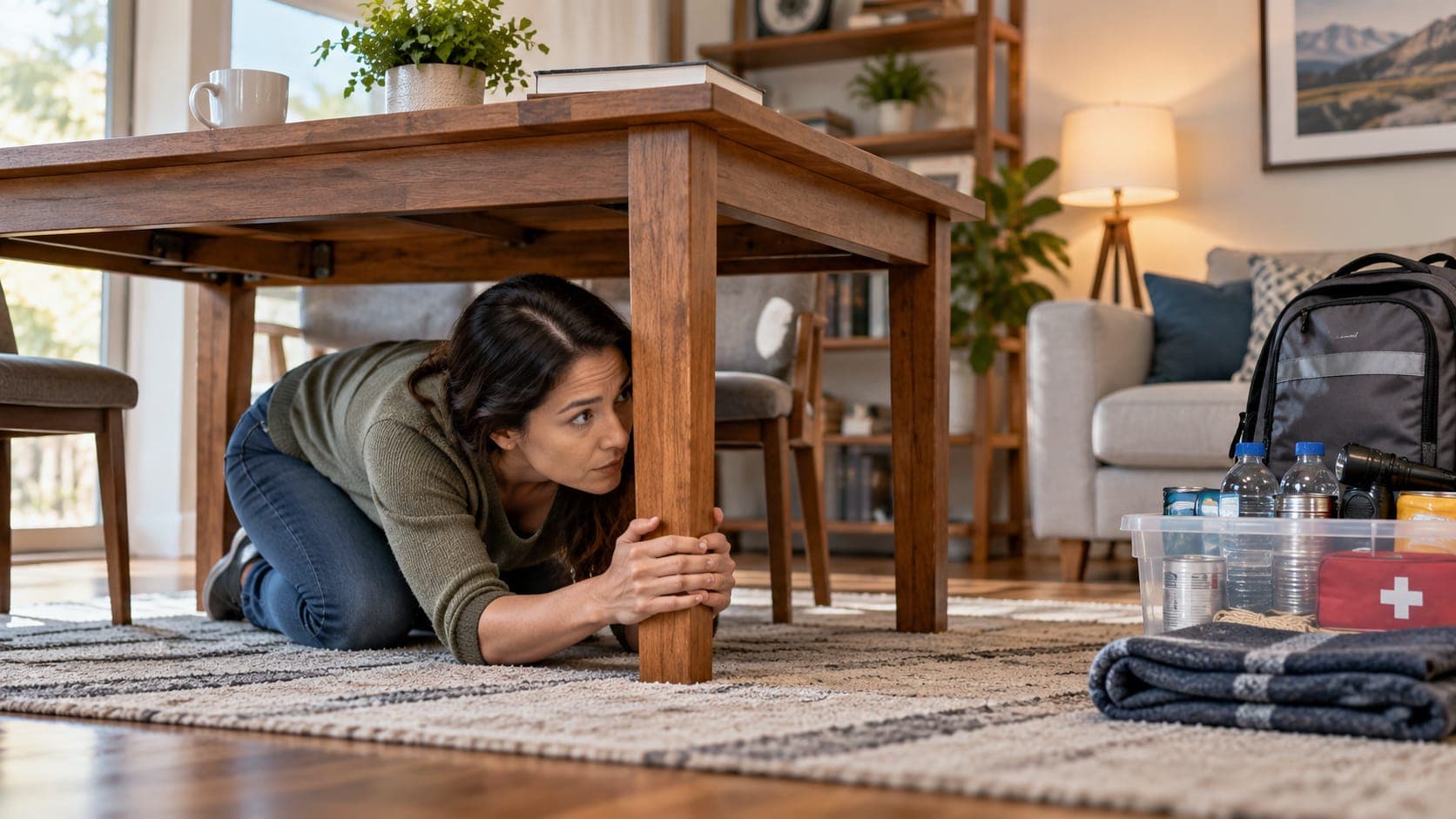
Earthquake safety comes down to a handful of habits. Most of them take minutes, not days, and none require special training. This page collects the most useful earthquake safety tips in one place, organized by when you need them: before, during and after shaking.
Think of it as a quick reference. Each part links to a deeper article if you want the full details.
Quick answer
Before an earthquake, secure heavy objects, store supplies and agree on a household plan. During shaking, Drop, Cover and Hold On wherever you are, and do not run outside or stand in a doorway. After shaking, expect aftershocks, check for injuries and gas leaks, stay out of damaged buildings, text instead of calling, and move to high ground right away if you are on the coast and felt strong or long shaking.
Before: tips that pay off later
Most earthquake injuries happen when people are hit by falling objects or trip and fall while trying to move during shaking. That means the best preparation is mostly about your surroundings. A few small fixes in the rooms where you sleep and sit make the biggest difference.
- Strap tall furniture, TVs and the water heater to wall studs.
- Move heavy items and glass to low shelves, especially near beds.
- Keep shoes and a flashlight by your bed in case of broken glass and a power cut.
- Store at least one gallon of water per person per day for several days.
- Pick an out-of-area contact everyone in the household can text.
- Learn where and how to shut off gas, water and electricity.
Make it a plan, not a one-time project
Safety tips only help if they become routine. Pick one weekend for a hazard hunt and supply check, then review once or twice a year. Our weekend action plan for before an earthquake breaks the work into a short checklist, and the emergency kit checklist covers supplies in detail. For a full step-by-step guide, see how to prepare for an earthquake.
During: Drop, Cover and Hold On
When the ground starts to shake, you have only seconds. The response recommended by Ready.gov, USGS and the Earthquake Country Alliance is Drop, Cover and Hold On. Drop to your hands and knees before the shaking knocks you down. Cover your head and neck, ideally under a sturdy table or desk. Hold on to your shelter, or to your head and neck, until the shaking stops.
If there is no table nearby, crawl to an interior wall away from windows and cover your head and neck with your arms. Stay put until the shaking ends.
| Situation | What to do |
|---|---|
| Indoors | Drop, Cover and Hold On. Stay inside until shaking stops. |
| In bed | Stay in bed, lie face down and cover your head and neck with a pillow. |
| Wheelchair or walker | Lock your wheels, bend over and cover your head and neck. |
| Outdoors | Move to an open area away from buildings, trees, streetlights and power lines if you can, then drop and cover. |
| Driving | Pull over away from overpasses, bridges, power lines and signs. Stop, set the parking brake and stay inside with your seatbelt on. |
Go deeper on specific places
Different places carry different hazards. Read what to do during an earthquake indoors for kitchens, high-rises, stores and schools, what to do outside for streets, trails and beaches, and what to do while driving for roads, bridges and tunnels.
After: the first hour
When shaking stops, take a breath and look around before you move. Broken glass and fallen objects are common, and aftershocks can follow at any time. Some are strong enough to cause more damage.
- Check yourself and others for injuries, and give first aid if you are trained.
- If you smell gas or hear hissing, leave right away, shut off the gas if you can, and report it from a safe place.
- Do not light matches or candles. Use flashlights.
- Stay out of buildings that look damaged.
- If you are near the coast and the shaking was strong or lasted a long time, move to high ground right away. Do not wait for an official warning.
- Text rather than call, so phone lines stay open for emergencies.
- Listen to local officials by radio, phone or TV.
If you are trapped
If you are trapped under debris, cover your mouth with a cloth or your shirt to filter dust. Send a text if you can, or tap on a pipe or wall so rescuers can hear you. Shout only as a last resort, since shouting can make you breathe in dangerous dust. A whistle in your kit is easier to hear and takes less energy.
For the first hours and days, including damage checks and recovery, see what to do after an earthquake.
Common mistakes to avoid
Many unsafe instincts feel natural in the moment. Knowing them ahead of time helps you avoid them.
- Running outside during shaking. You can be hit by falling glass, bricks or decorations near exits.
- Standing in a doorway. In modern homes doorways are not stronger than other parts of the house, and the door can swing into you. See the doorway myth explained.
- Following the so-called triangle of life. Safety agencies do not recommend it.
- Using elevators during or right after shaking.
- Rushing back into a damaged building to grab belongings.
- Assuming the first earthquake is the biggest. Occasionally a larger one follows.
Staying informed without panic
After you feel shaking, it is natural to want to know what happened. The EQRadar live map shows earthquakes reported by USGS, and the aftershock forecast page shows official USGS aftershock forecasts when they are issued. For coastal threats, rely on official NOAA tsunami alerts and local officials. No website can predict the exact time of the next earthquake, so focus on what you can control.
Frequently asked questions
What is the safest place to be during an earthquake?
Under a sturdy table or desk, away from windows and tall furniture, is usually the safest spot indoors. If there is no table, get down next to an interior wall and protect your head and neck.
Should I go outside when an earthquake starts?
No. Trying to move during strong shaking is a common cause of injury, and the area just outside a building is where glass and debris often fall. Stay where you are and Drop, Cover and Hold On.
How soon is it safe to go back inside after an earthquake?
Only go back into a building if it shows no signs of serious damage, such as large cracks, leaning walls or a shifted foundation. If you are unsure, wait for an inspection by local officials or a qualified professional.
Do earthquake safety tips change for children?
The basic actions are the same, but children need practice and simple explanations. See our guide to earthquake preparedness for families.
Key takeaway
Secure what could fall, keep supplies and a plan, Drop, Cover and Hold On during shaking, and after it stops, watch for aftershocks, gas leaks and tsunami signs. Skip the doorway, the triangle of life and the dash outside.
Sources
- Earthquakes — Ready.gov (U.S. Department of Homeland Security)
- Drop, Cover, and Hold On — Earthquake Country Alliance
- Seven Steps to Earthquake Safety — Earthquake Country Alliance
- Earthquake Hazards Program — U.S. Geological Survey