What to Do During an Earthquake While Driving
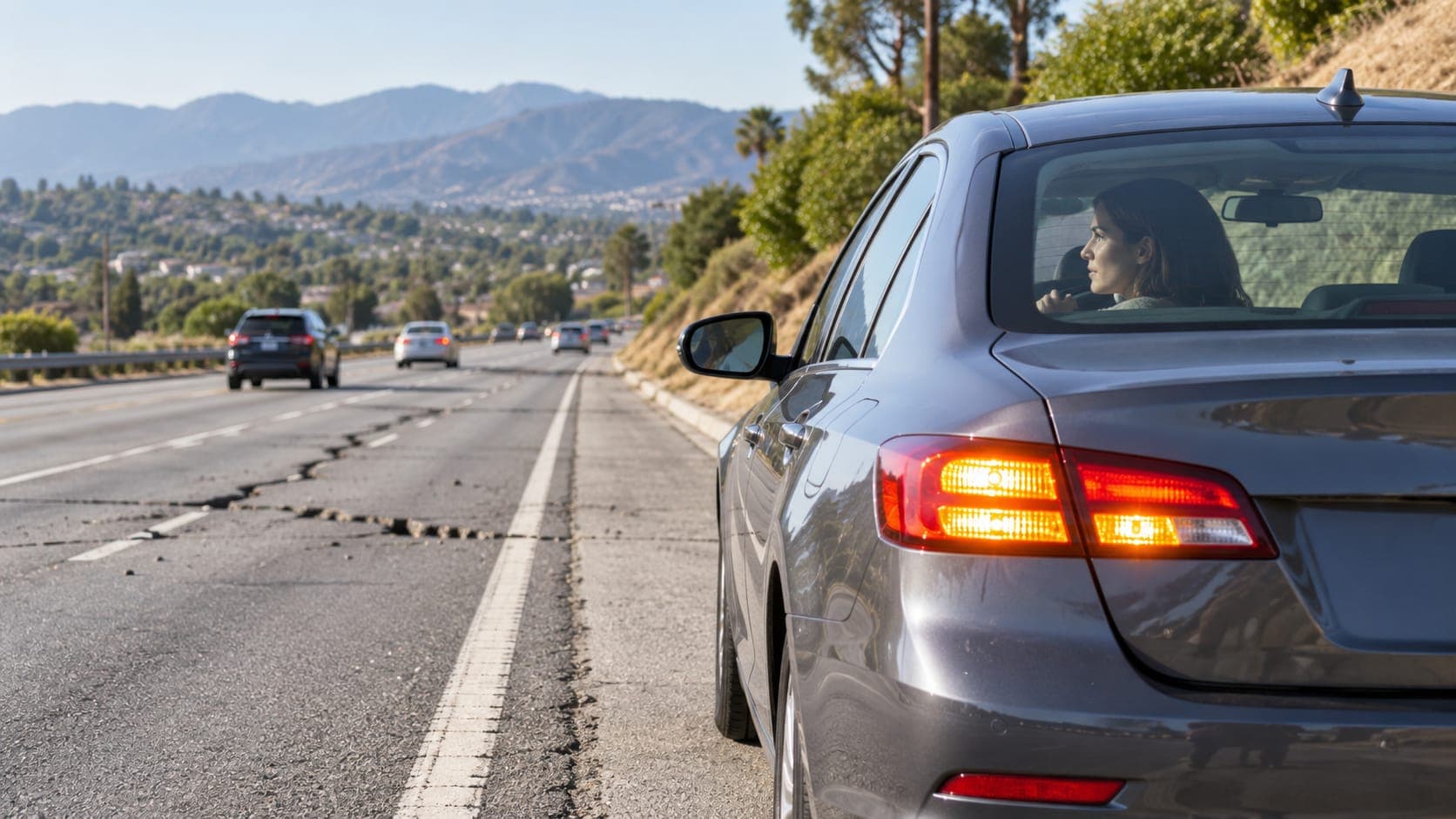
An earthquake can feel strange from behind the wheel. At first it may feel like a flat tire or strong wind pushing the car. In strong shaking, steering becomes hard and the road itself can crack or shift.
This guide explains what to do during an earthquake while driving, including special cases such as bridges, tunnels and parking garages, what to do if you are on a bus or train, and how to respond if you receive an earthquake early-warning alert.
Quick answer
If an earthquake hits while you are driving, slow down and pull over to a clear spot away from overpasses, bridges, power lines, trees and signs. Stop, set the parking brake and stay in the car with your seatbelt on until the shaking stops. Then drive carefully, watching for damaged roads. If a power line falls on your car, stay inside until help arrives.
Step by step: if you feel shaking while driving
Ready.gov and the Earthquake Country Alliance give the same core advice for drivers. The aim is to stop safely, away from anything that could fall on the car, and to stay protected inside it.
- Slow down gradually. Avoid slamming on the brakes, since other drivers may also be losing control.
- Check your mirrors and signal, then pull over to the side of the road.
- Choose a spot away from overpasses, bridges, power lines, trees, signs and buildings.
- Stop and set the parking brake.
- Stay inside with your seatbelt fastened until the shaking stops.
- Turn on the radio for news and instructions.
Why stay in the car?
Your car offers protection from small falling objects, and the seatbelt keeps you in place. Getting out during shaking puts you on a moving road surface, among other cars and near things that may fall. Stay inside until the shaking has stopped.
There is one important exception after the shaking: if a power line falls on your car, stay inside until trained help arrives. Touching the car and the ground at the same time could be deadly.
On a bridge or overpass
Bridges and overpasses are among the places drivers are told to avoid stopping under or on. If shaking starts while you are approaching one, stop before you reach it if you can do so safely. If you are already on a bridge, slow down and stop as safely as you can rather than speeding to get off, and stay in the car with your seatbelt on.
After the shaking stops, look carefully before moving. Joints where the bridge meets the road can shift and leave gaps or bumps. Drive slowly, and follow any instructions from officials who may close the bridge for inspection.
In a tunnel or parking garage
In a tunnel, slow down, pull to the side if there is room, stop and stay in your car with your seatbelt on. Turn on your hazard lights. Once the shaking stops, follow instructions from signs, loudspeakers or staff, and drive out carefully if the way is clear.
In a parking garage, the same advice applies if you are in your car: stop and stay inside with your seatbelt on. If you are on foot, Drop, Cover and Hold On away from anything that could fall, and cover your head and neck. Afterward, do not use the elevator, and leave carefully by the stairs or ramp.
On a bus, train or other public transit
If you are seated, stay in your seat, bend forward and protect your head and neck with your arms. If you are standing, get low or hold on firmly to a pole or seat so you are not thrown. Do not try to get off a moving vehicle.
Bus and train operators have their own procedures, and some rail systems are set up to slow trains automatically when they receive an early-warning signal. When the shaking stops, listen to the operator and wait for instructions before leaving. Stepping onto tracks or into traffic can be very dangerous.
After the shaking stops
When the shaking ends, check yourself and your passengers for injuries. Then decide whether to drive on. Avoid roads, bridges and ramps that look damaged.
- Drive slowly and watch for cracks, fallen rocks, debris and broken traffic signals.
- Treat dark traffic lights as four-way stops.
- Stay away from downed power lines.
- Keep roads clear for emergency vehicles, and avoid driving unless you need to.
- If you are near the coast and the shaking was strong or long, go to high ground or inland right away.
- Expect aftershocks, and pull over again if more shaking starts.
What an early-warning alert means while driving
In California, Oregon and Washington, the USGS ShakeAlert earthquake early warning system can send alerts to phones through Wireless Emergency Alerts and some apps. An alert means an earthquake has already started and shaking may reach you within seconds. It is not a prediction, and it may arrive just before shaking, at the same time, or after, depending on how close you are to the Epicentre.
If you get an alert while driving, do not grab your phone to read it. Slow down, check your mirrors, and pull over to a safe spot away from overpasses, power lines and signs as you would if you felt shaking. Stop, set the parking brake and stay buckled in. Read more in how earthquake early warning works and our lesson on forecasts, predictions and early warning.
Be ready before you drive
If roads close, you may wait in your car for hours or need to walk home. A car kit with water, snacks, a flashlight, a first aid kit, a blanket, walking shoes and a phone charger makes a big difference. See our emergency kit checklist for a full car kit list.
Frequently asked questions
How can I tell if it is an earthquake and not a flat tire?
During an earthquake, you may notice other cars swerving, power lines and signs swaying, or the road surface moving. If you are unsure, slowing down and pulling over safely is the right move either way.
Should I keep driving to get off a bridge?
No. Slow down and stop as safely as you can, stay in the car with your seatbelt on, and wait for the shaking to end. Then drive off carefully, watching for gaps at the bridge joints.
Is it safe to get out of my car after an earthquake?
Usually yes, once the shaking stops, if the area around you is safe. The exception is when a power line has fallen on your car. Then stay inside until trained help arrives.
Does EQRadar send alerts to my phone while I drive?
No. EQRadar does not send SMS, email or push notifications. Its in-app alerts work only while the page is open. For early warning on your phone, rely on official Wireless Emergency Alerts and ShakeAlert-powered apps where they are available.
Key takeaway
While driving, slow down, pull over away from overpasses, bridges, power lines, trees and signs, set the parking brake and stay buckled in until the shaking stops. Afterward, drive carefully, and if a power line falls on your car, stay inside until help arrives.
Sources
- Earthquakes — Ready.gov (U.S. Department of Homeland Security)
- Drop, Cover, and Hold On — Earthquake Country Alliance
- Earthquake Hazards Program — U.S. Geological Survey