What to Do After an Earthquake
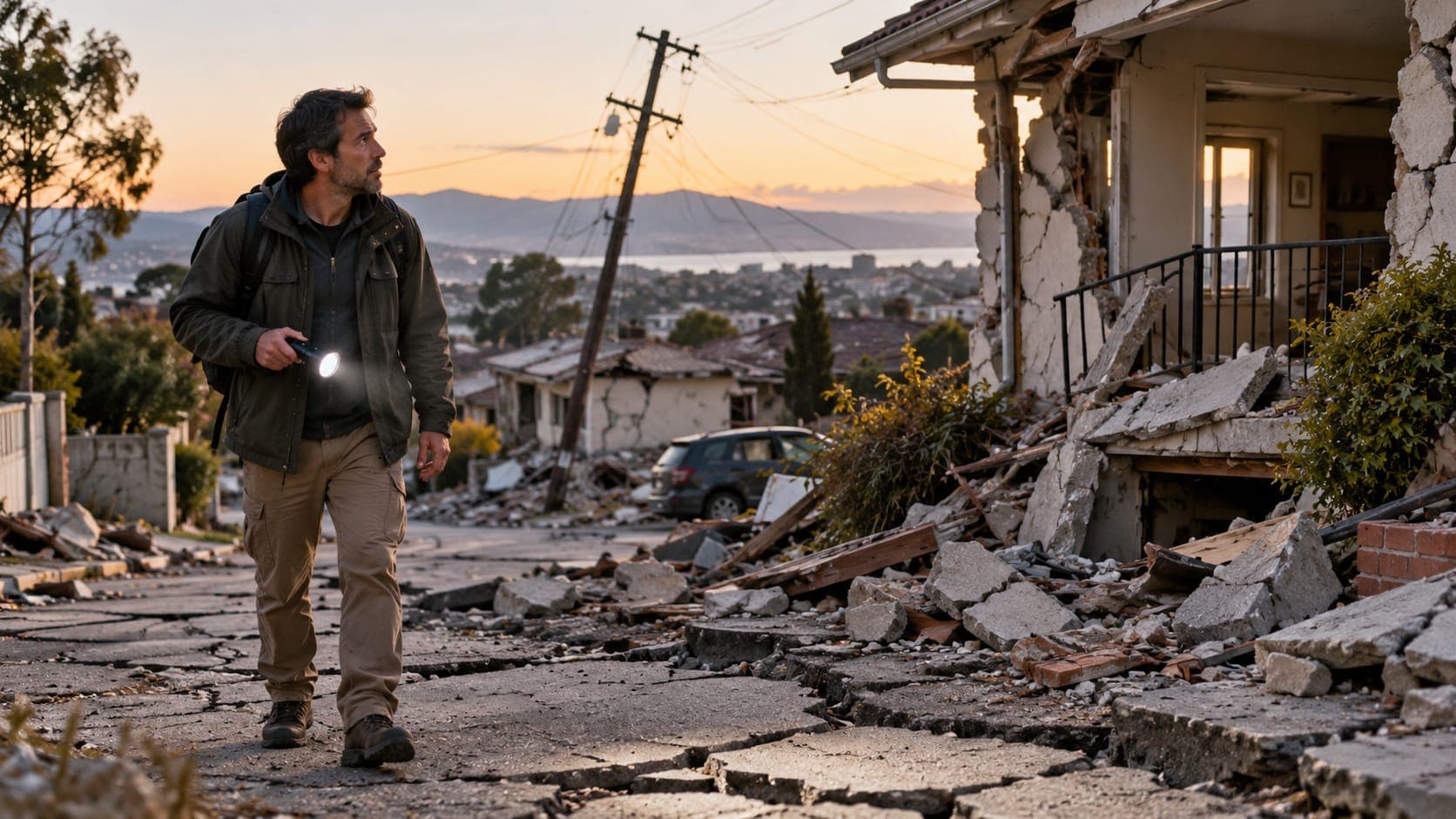
The shaking usually lasts less than a minute, but what you do in the minutes, hours and days after an earthquake can matter just as much as how you reacted during it. Many injuries after earthquakes come from broken glass, fires, gas leaks and entering damaged buildings.
This guide walks through what to do after an earthquake in the order you will face it: the first few minutes, the first hours and the days that follow.
Quick answer
After an earthquake, expect aftershocks and Drop, Cover and Hold On if more shaking starts. Check for injuries, put on sturdy shoes, and check for gas leaks, fires and damage. If you smell gas or hear hissing, leave and report it. Stay out of damaged buildings, text instead of calling, and listen to local officials. If you are on the coast and felt strong or long shaking, move to high ground right away.
The first few minutes
When the shaking stops, pause and look around before you move. Aftershocks can begin within minutes. If more shaking starts, Drop, Cover and Hold On again.
- Check yourself for injuries, then check people around you. Give first aid if you are trained, and do not move seriously injured people unless they are in immediate danger.
- Put on sturdy shoes and gloves before walking over broken glass or debris.
- If you are on the coast and the shaking was strong or lasted a long time, go to high ground or inland right away. Do not wait for an official warning.
- If you are in a damaged building, leave carefully once shaking stops. Use stairs, not elevators.
- If you are trapped, cover your mouth, text for help if you can, and tap on a pipe or wall so rescuers can hear you.
Check for hazards
Once everyone is safe, look for the hazards that cause harm after the shaking ends. Use a flashlight, not matches, candles or lighters, because there may be gas in the air.
Gas is the most urgent concern. If you smell gas or hear a blowing or hissing sound, open a window if you can do so quickly, get everyone out, and turn off the gas at the outside meter if you know how. Report the leak to the gas company from a safe place. Do not turn the gas off just in case. Once it is off, only the utility should turn it back on, and that can take a long time after a large earthquake.
Also check for sparks, broken wires or the smell of hot insulation. If you see them, turn off the electricity at the main breaker if it is safe to reach. Look for water leaks, spilled chemicals, and cracks in chimneys or walls.
Expect aftershocks
Aftershocks are smaller earthquakes that follow a larger one in the same area. They are a normal part of an earthquake sequence and are most frequent in the first hours and days. Most are smaller than the Mainshock, but a strong aftershock can bring down structures that were already weakened. Occasionally, a later earthquake turns out to be larger than the first.
After significant earthquakes in the United States, USGS often publishes an aftershock forecast that gives the chances of more earthquakes over the coming day, week and month. You can see those official forecasts on the EQRadar aftershock forecast page, and read more in how long do aftershocks last.
Staying in touch
Phone networks are often overloaded after a large earthquake. Text messages use less network capacity and are more likely to get through than calls. Keep calls short and save them for emergencies, so lines stay open for people who need help.
Contact your out-of-area contact person to let them know you are safe, and follow the household plan you made in advance. Listen to a battery-powered or hand-crank radio, or check official local sources, for instructions on shelters, water safety and road closures. Conserve your phone battery by dimming the screen and closing apps you do not need.
The first hours
If your home seems safe, stay there and use your emergency supplies. If it shows serious damage, such as a shifted foundation, large cracks, leaning walls or a damaged chimney, get out and stay out until it has been inspected. Take your go-bag with you.
- Check on neighbors, especially older adults and people who live alone.
- Keep pets on a leash or in a carrier. They may be frightened and try to run.
- Clean up spilled medicines, bleach, gasoline and other chemicals carefully.
- Open cabinet doors slowly, because items may have shifted and can fall out.
- Avoid driving unless necessary, so roads stay clear for emergency vehicles.
- Stay away from downed power lines and anything touching them.
The first days
In the days after a damaging earthquake, follow local guidance on water. Officials may issue a boil-water notice if pipes were damaged. Until you know tap water is safe, use your stored water. If the power is out, keep refrigerator and freezer doors closed as much as possible, and throw out food that may have spoiled.
Look after your mental health too. Repeated aftershocks can be exhausting and frightening, especially for children. Keeping routines, talking about what happened and limiting time spent watching news coverage can help. Reach out for support if stress does not ease.
Documenting damage and insurance
If your property is damaged, take photos and videos before you clean up, as long as it is safe to do so. Keep receipts for repairs and any extra living costs. Contact your insurance company as soon as you can. Note that standard homeowners and renters policies in the United States usually do not cover earthquake damage, which needs separate coverage.
In a declared disaster, FEMA and local agencies may offer assistance. Follow official announcements about how to apply, and be cautious of anyone who knocks on your door offering quick repairs for cash up front.
Frequently asked questions
How long should I wait before going back inside after an earthquake?
There is no set time. Go back in only if the building shows no signs of serious damage. If you are unsure, wait until local officials or a qualified inspector say it is safe.
Should I shut off the gas after every earthquake?
No. Shut it off only if you smell gas, hear hissing or see other signs of a leak. Turning it off unnecessarily can leave you without gas for a long time, because only the utility should restore it.
Why is texting better than calling after an earthquake?
Texts use less network capacity and can be delivered when the network is less busy, so they often get through when calls fail. Fewer calls also helps keep lines open for emergencies.
Can an aftershock be bigger than the first earthquake?
It can happen, but it is uncommon. When it does, the first earthquake is then called a foreshock. See can aftershocks be stronger for more.
Key takeaway
After an earthquake, stay alert for aftershocks, check people first and hazards second, deal with gas leaks immediately, stay out of damaged buildings, text instead of calling, and follow local officials. On the coast, strong or long shaking means move to high ground now.
Sources
- Earthquakes — Ready.gov (U.S. Department of Homeland Security)
- Seven Steps to Earthquake Safety — Earthquake Country Alliance
- Earthquake Hazards Program — U.S. Geological Survey
- Federal Emergency Management Agency — FEMA