Earthquake Emergency Kit Checklist
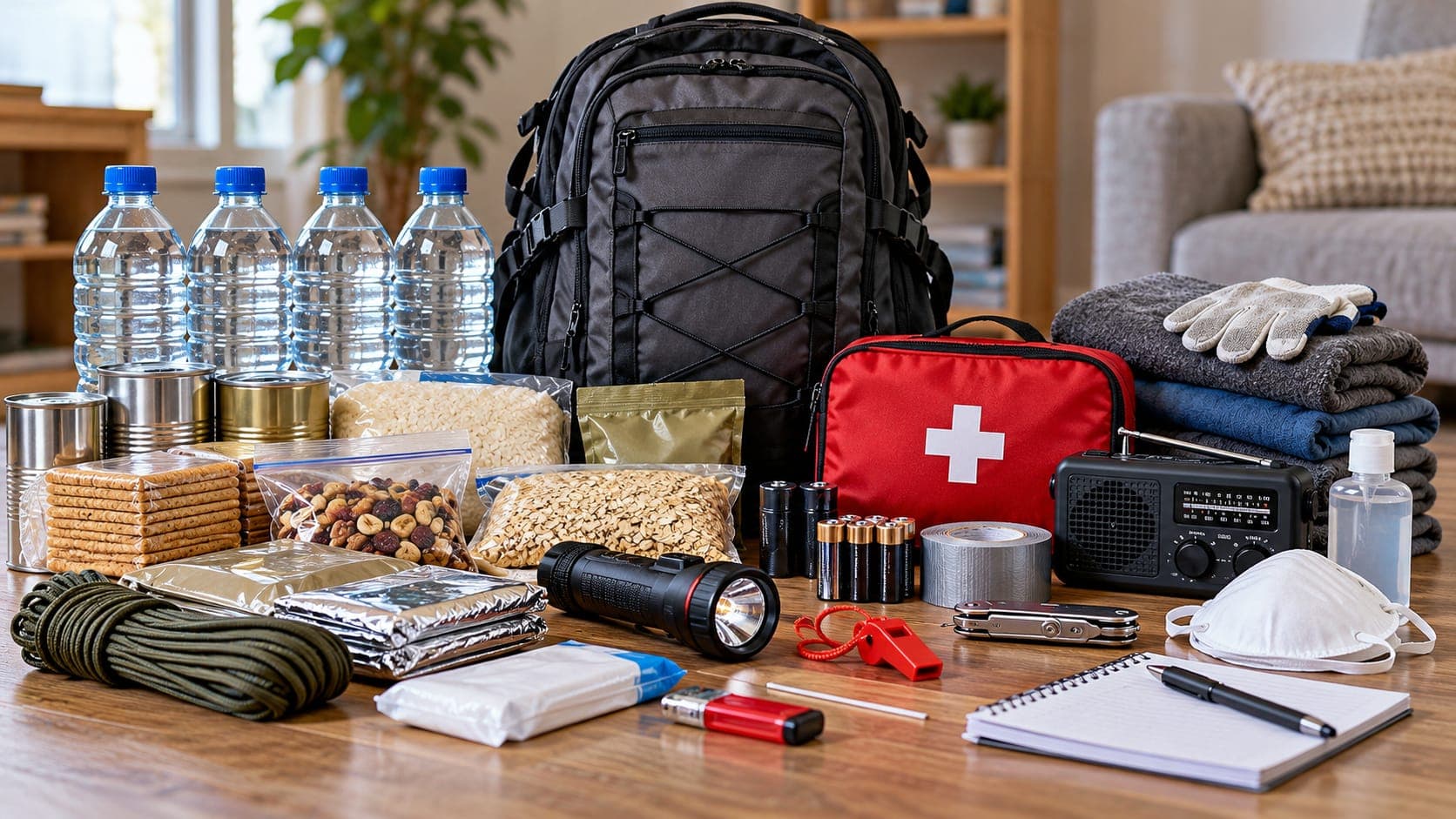
After a damaging earthquake, you may be without running water, power or open stores for days. Roads can be blocked, and emergency crews may be busy with the most urgent calls. An emergency kit lets you take care of yourself and your household until things return to normal.
This earthquake emergency kit checklist goes beyond the basics. It covers four kits for four places, items for people with special needs, and how to store and refresh everything so it is ready when you need it.
Quick answer
A good earthquake emergency kit holds at least one gallon of water per person per day for several days, non-perishable food, a flashlight, a battery-powered or hand-crank radio, a first aid kit, extra batteries, a whistle, dust masks, basic tools, medicines and copies of important documents. Keep a main kit at home, smaller kits in your car and at work, and a grab-and-go bag. Check everything twice a year.
Why you need more than one kit
Earthquakes do not wait until you are home. You might be at your desk, on the freeway or picking up children when the shaking starts. That is why Ready.gov and the Earthquake Country Alliance suggest keeping supplies in more than one place.
A large home kit helps you shelter in place for several days. A go-bag lets you leave quickly if your home is unsafe. Car and work kits help you get through the first hours wherever you are, and possibly make it home.
| Kit | Purpose | Where to keep it |
|---|---|---|
| Home kit | Shelter in place for several days | Easy-to-reach closet or garage, away from heavy objects that could fall on it |
| Go-bag | Leave quickly with essentials | Near an exit, one per person |
| Car kit | Wait out road closures or walk home | Trunk or under a seat |
| Work kit | Get through the first hours at work | Under your desk or in a locker |
Home kit checklist
Your home kit is the largest. Store it in sturdy containers, such as plastic bins with lids, so you can carry them if needed. Ready.gov's basic kit list is the foundation.
- Water: at least one gallon per person per day for several days, for drinking and basic hygiene.
- Non-perishable food that needs little or no cooking, plus a manual can opener.
- Flashlights and extra batteries. Avoid candles because of fire risk.
- Battery-powered or hand-crank radio for local news.
- First aid kit and any prescription medicines you rely on.
- Whistle to signal for help.
- Dust masks, plastic sheeting and duct tape.
- Moist towelettes, garbage bags and plastic ties for sanitation.
- Wrench or pliers to turn off utilities if needed.
- Phone chargers and a backup battery.
- Sturdy shoes, work gloves, warm clothing and blankets.
- Copies of important documents in a waterproof bag.
- Some cash, since card readers may not work without power.
- Local maps in case phone service is down.
Go-bag checklist
A go-bag is a backpack you can grab and carry. Keep it light enough to walk with for a while. Everyone in the household who can carry one should have their own.
- Water bottles and high-energy snacks.
- Small flashlight or headlamp with spare batteries.
- A few days of medicines and a copy of prescriptions.
- Compact first aid kit and personal hygiene items.
- A change of clothes, sturdy shoes and a rain layer.
- Whistle, dust mask and work gloves.
- Copy of your household plan with contact numbers written on paper.
- Small amount of cash.
Car kit and work kit
Your car kit should help you wait in place for hours or walk home if roads are closed. Include water, snacks, a flashlight, a first aid kit, a blanket, walking shoes, a phone charger, jumper cables, flares or reflective triangles, and a paper map. Heat in a parked car can spoil food and water faster, so check this kit more often.
At work, keep a small bag with water, snacks, a flashlight, a whistle, comfortable shoes, any daily medicines and a dust mask. If you wear dress shoes, sneakers in your desk can make it much easier to walk over debris or walk home. Learn your workplace emergency plan as well.
Add items for your household's needs
A basic kit is just the start. Look at who lives with you and add what each person would need for several days without outside help.
- Medicines: a supply of prescriptions, plus a written list of doses and the doctors who prescribe them.
- Medical devices: spare batteries, chargers and a plan for anything that needs electricity.
- Glasses, contact lenses and supplies, hearing aid batteries.
- Infants: formula, bottles, diapers, wipes and diaper rash cream.
- Pets: food, extra water, a leash or carrier, medicines and vaccination records.
- Mobility aids: a spare cane or walker if possible, and a list of the models and settings you use.
- Comfort items for children, such as a small toy or book.
Storing your kit the right way
Where you store supplies matters as much as what you store. Keep your kit somewhere you can reach even if part of the house is damaged, and not on a high shelf where shaking could throw it down. Some people split supplies between a closet inside and a shed or garage outside, so at least part is reachable.
Store water and food in a cool, dark, dry place. Keep containers sealed. Label everything with the date you packed it, so you know when to replace it.
Keeping your kit fresh
A kit that has expired food, dead batteries and outgrown clothes will not help much. Ready.gov suggests reviewing your kit regularly. Twice a year is easy to remember if you tie it to a date you already note, such as a holiday or the start of a new season.
- Check expiration dates on food, water, medicines and batteries.
- Replace anything expired, used or damaged.
- Update clothing and shoe sizes for growing children.
- Update phone numbers and copies of documents.
- Test flashlights and radios.
- Think about anything new your household now needs.
Frequently asked questions
How many days of supplies should be in an earthquake kit?
Ready.gov recommends enough to manage on your own for several days. Many local agencies in high-hazard areas encourage people to plan for longer, because a large earthquake can disrupt services over a wide region.
Can I use tap water I stored myself?
Yes, if you store it in clean, food-grade containers and replace it on a regular schedule. Commercially bottled water is the simplest option because it stays sealed until you open it.
Should I buy a pre-made emergency kit?
A pre-made kit can be a good starting point, but most lack enough water and do not include your medicines, documents or items for children and pets. Check it against this list and add what is missing.
Where should I keep my emergency kit at home?
Keep it somewhere easy to reach, near an exit if possible, and not under heavy furniture or on a high shelf. Make sure everyone in the household knows where it is.
Is an earthquake kit different from other emergency kits?
Mostly no. The same supplies help with storms, wildfires and power outages. Earthquake kits put extra weight on sturdy shoes, gloves, dust masks and a whistle, because of broken glass, dust and the chance of being trapped.
Key takeaway
Keep a main kit at home, a go-bag for each person, and smaller kits in your car and at work. Start with water, food, light, a radio, first aid and medicines, add what your household needs, and check everything twice a year.
Sources
- Build a Kit — Ready.gov (U.S. Department of Homeland Security)
- Earthquakes — Ready.gov (U.S. Department of Homeland Security)
- Seven Steps to Earthquake Safety — Earthquake Country Alliance
- American Red Cross — American Red Cross