What to Do During an Earthquake Outside
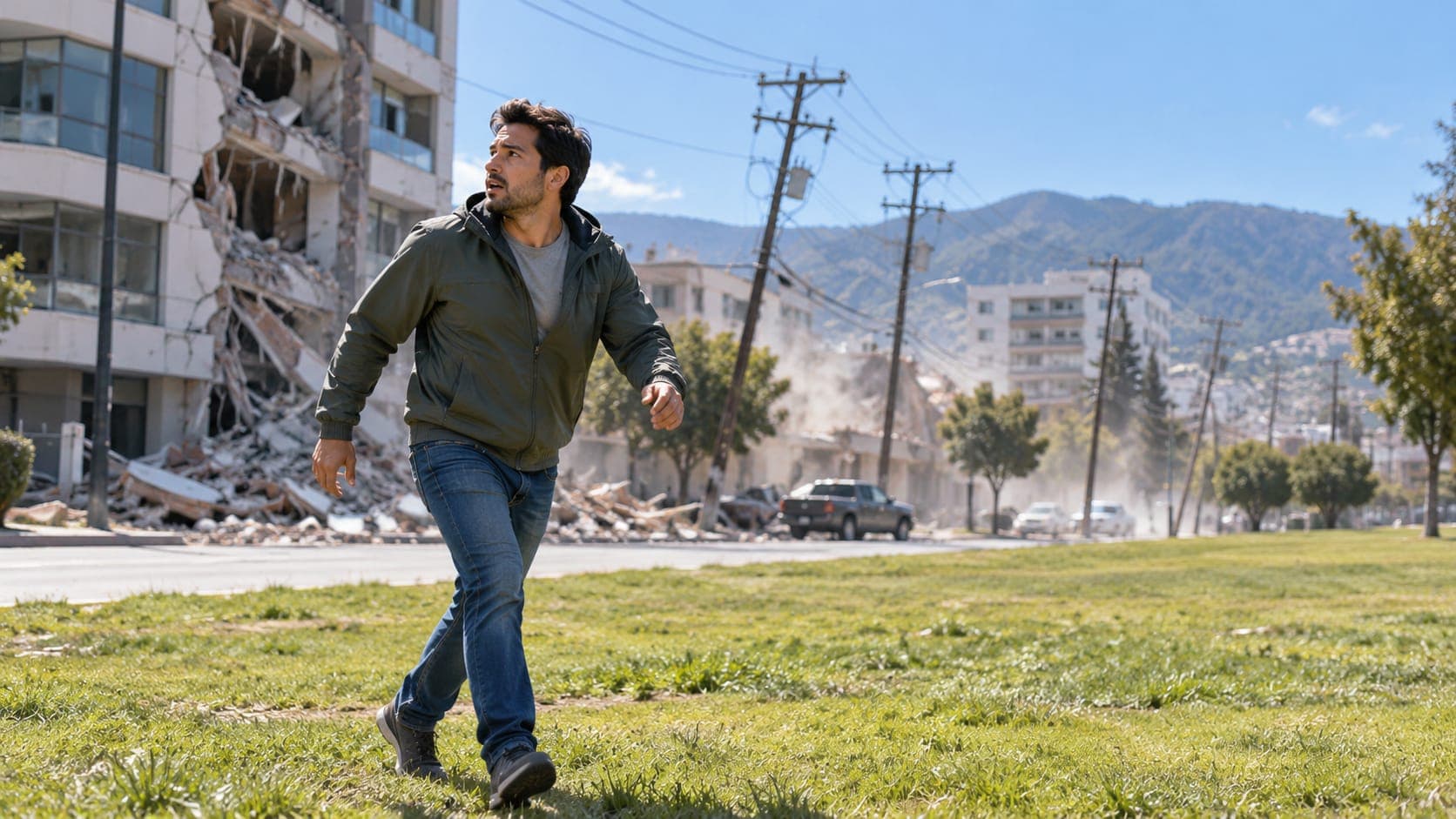
Being outside during an earthquake is often safer than being inside, because there is less above you to fall. But outdoor places have their own hazards: glass and stone from building fronts, falling branches, downed power lines, rockfall on trails and, near the coast, the possibility of a Tsunami.
This guide explains what to do during an earthquake outside in the places people most often find themselves, and what to do as soon as the shaking stops.
Quick answer
If you are outside during an earthquake, stay outside. If you can do it safely, move to an open area away from buildings, trees, streetlights and power lines, then drop to the ground and cover your head and neck until the shaking stops. Do not run into a building. If you are near the coast and the shaking is strong or long, move to high ground or inland as soon as the shaking stops.
The basic rule: stay out and get clear
Ready.gov's advice for being outdoors is simple. Stay outside, and move away from anything that could fall on you. Then drop to your hands and knees and cover your head and neck. Strong shaking can knock people over, so getting low protects you from falling as well as from debris.
Do not run into a building to take cover. Entrances are where glass, signs and pieces of the building's front often fall, and moving during shaking causes many injuries.
- Buildings and walls, especially older brick buildings.
- Trees and large branches.
- Streetlights, utility poles and power lines.
- Signs, billboards and overhangs.
- Chimneys and anything stacked high, such as pallets or crates.
In a park or open area
An open field, a park lawn or an empty parking lot is about as safe a place as you can be during shaking. Stay there, drop and cover. If you are under a large tree, move to a clear area if you can do it in a few steps. Stay in the open after the shaking stops for a while, since aftershocks are common.
On a city street
Downtown streets can be dangerous during shaking. Windows, decorative stonework, signs and parts of building fronts can fall onto sidewalks. If you can safely reach an open space away from buildings, such as a plaza or wide open area, go there. If you cannot, drop and cover where you are and protect your head and neck. Do not try to run along the sidewalk under building fronts.
After the shaking, watch for falling glass from upper floors, broken water mains and downed wires. Stay off the road so emergency vehicles can get through.
On a hiking trail or in the mountains
On steep ground, the main hazards are landslides and rockfall. Shaking can loosen rocks and soil above you, and they can keep falling after the shaking ends. If you are on a trail below a cliff or steep slope, move away from it if you can do so safely, then get low and cover your head.
Once the shaking stops, look uphill before moving. Stay away from the bases of slopes and the edges of cliffs, which can crack or give way. Avoid crossing stream channels, where debris may move. Aftershocks can trigger new slides on slopes that were weakened, so be careful about which way you hike out.
At the beach or on the coast
During shaking, drop and cover. As soon as the shaking stops, think about tsunamis. Ready.gov and NOAA advise that if you are in a coastal area and feel strong shaking or shaking that lasts a long time, you should move to high ground or inland right away. Do not wait for an official warning, because a local tsunami can arrive within minutes.
Other natural warning signs include a sudden rise or fall of the ocean or a loud roar from the sea. Go on foot if you can, since roads may be damaged or jammed. Stay away from the coast until officials say it is safe, because a tsunami is a series of waves and later ones can be larger. Check official NOAA tsunami alerts and our lesson on tsunami alert basics.
Near lakes, rivers and dams
Shaking can cause waves on lakes and reservoirs, and loose, wet ground near riverbanks can slump or crack. Ground that turns soft from Liquefaction can make shorelines and fill land unstable. During shaking, move away from the water's edge and steep banks if you can, then drop and cover.
If you are on a boat in deep water, the shaking may barely be felt. Listen for official instructions. If you are boating near the coast after strong shaking on land, follow tsunami guidance from officials.
In an outdoor stadium
In an outdoor stadium or grandstand, stay in your seat or get down in the space between rows. Bend over and protect your head and neck with your arms. Do not rush for the exits during shaking, since crowds on stairs can cause serious injuries. When the shaking stops, leave calmly and follow staff directions.
When the shaking stops
Look around before you move. Check for injuries, downed power lines and damage to nearby buildings. Treat every downed wire as live, and stay well away from it. Do not go into damaged buildings. Text rather than call to tell people you are safe. For the next steps, read what to do after an earthquake. If you are driving instead, see what to do while driving.
Frequently asked questions
Is it safer to be outside or inside during an earthquake?
If you are already outside in an open area, it is usually safer to stay there. If you are inside, stay inside and Drop, Cover and Hold On. The danger comes from trying to move between the two during shaking.
Can the ground open up and swallow people during an earthquake?
No, not in the way movies show. The ground can crack, slump or shift along a fault, but it does not open into a deep gap that swallows people and closes again.
How do I know if I need to evacuate for a tsunami?
If you are near the coast and feel strong or long shaking, go to high ground or inland immediately without waiting. If you did not feel shaking, follow official tsunami alerts and local officials.
What should I do if I am hiking alone when an earthquake strikes?
Get away from steep slopes and cliffs if you can, get low and protect your head. After the shaking, check the trail ahead and above you for loose rock, and choose the safest route out. Let someone know where you are if you have signal.
Key takeaway
Outside, stay outside: get clear of buildings, trees, poles and wires if you safely can, then drop and cover. On trails, watch for rockfall and landslides. On the coast, strong or long shaking means move to high ground as soon as it stops.
Sources
- Earthquakes — Ready.gov (U.S. Department of Homeland Security)
- Tsunamis — Ready.gov (U.S. Department of Homeland Security)
- Drop, Cover, and Hold On — Earthquake Country Alliance
- Earthquake Hazards Program — U.S. Geological Survey