What to Do Before an Earthquake
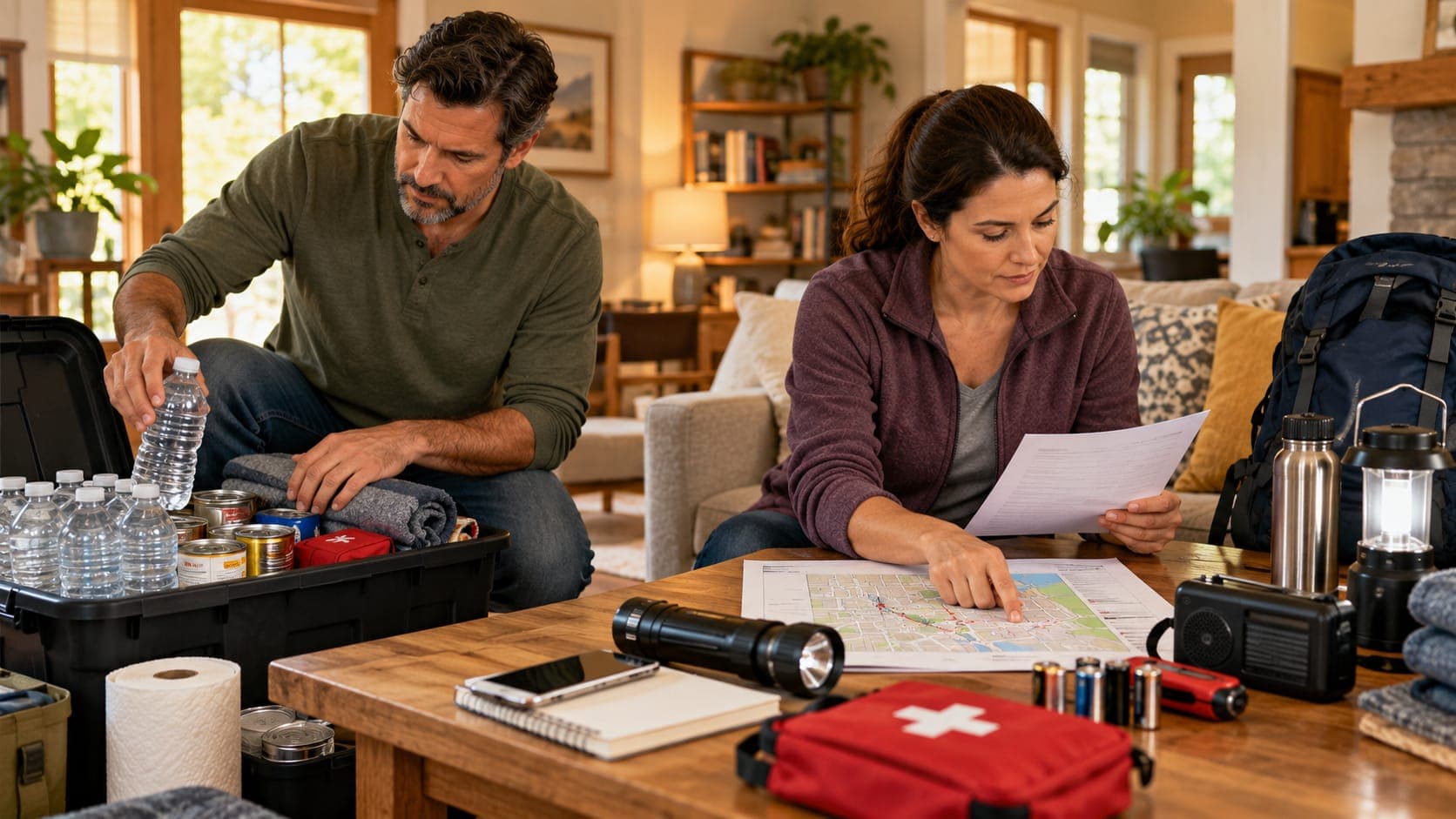
Knowing you should prepare for an earthquake is easy. Actually doing it is harder, because the list can feel endless. This article turns what to do before an earthquake into a weekend project you can finish, plus a few follow-up tasks you can spread over the next month.
If you want the big-picture overview first, start with our guide on how to prepare for an earthquake. This page focuses on doing the work: a room-by-room hazard hunt, a short plan, and questions about insurance and your community.
Quick answer
Before an earthquake, walk through your home room by room and fix what could fall, break or block an exit. Strap tall furniture and the water heater, move heavy items low, and identify a safe spot in each room. Then build or check your supplies, write a short household plan, look into earthquake insurance, and connect with neighbors. A single weekend covers most of it.
A weekend action plan
Breaking the work into blocks makes it manageable. Here is one way to split it up. Adjust the order to fit your home and household.
| When | Task | What you need |
|---|---|---|
| Saturday morning | Room-by-room hazard hunt and a list of fixes | Notepad, flashlight |
| Saturday afternoon | Hardware store run and securing furniture | Straps, L-brackets, latches, stud finder, drill |
| Sunday morning | Check or build your emergency kit | Bins, water, food, flashlights, batteries |
| Sunday afternoon | Household meeting, plan and practice drill | Paper copy of your plan, phone numbers |
The room-by-room hazard hunt
Go through each room and imagine it shaking hard for 30 seconds. Ask what could fall on someone, fly across the room, break, or block a door. Write down every problem, then fix the ones near beds, couches, desks and exits first.
- Bedrooms: no heavy pictures, mirrors or shelves over the bed. Secure dressers and bookcases. Keep shoes and a flashlight within reach.
- Living room: strap the TV and tall furniture. Use museum putty or wax for small decorations on shelves.
- Kitchen: add childproof-style latches to cabinets. Store heavy pots, glass and breakables on low shelves.
- Bathroom: secure medicine cabinets and keep glass bottles low.
- Garage or laundry: strap the water heater, store chemicals low and apart, and secure heavy tools and shelves.
- Home office: anchor filing cabinets and bookcases, and secure computer monitors.
- Hallways and exits: keep them clear of furniture that could tip and block the way out.
Find a safe spot in every room
While you are in each room, pick the spot where you would Drop, Cover and Hold On. The best choice is under a sturdy table or desk. If there is none, choose a spot next to an interior wall, away from windows, tall furniture and hanging objects.
Point out these spots to everyone in your home. Practice by actually getting down and covering your head and neck, so your body remembers what to do. For more detail by room and situation, read what to do during an earthquake indoors.
Learn your utilities
Find your gas meter, main water valve and electrical panel. Learn how each one works, and keep any needed tool, such as a wrench for the gas valve, nearby. Your gas company can explain how to shut off gas safely. Remember the rule: only turn gas off if you smell gas or hear a leak, because only the utility should turn it back on.
If you own your home, ask whether your water heater has proper straps and whether your gas appliances have flexible connectors. Our guide on how to earthquake-proof your home covers these and bigger structural fixes.
Plan and supplies in an afternoon
Keep the household plan short enough to fit on one page. Write down an out-of-area contact, a meeting place near home and one farther away, and key medical information. Make a copy for every wallet and backpack.
Then check your supplies against our emergency kit checklist. If you are starting from nothing, focus first on water, a flashlight, a radio, a first aid kit and any medicines. You can add the rest over the following weeks.
Questions to ask about insurance
In the United States, standard homeowners and renters insurance policies usually do not cover earthquake damage. Earthquake coverage is typically a separate policy or add-on. Whether it makes sense depends on your hazard, your building, your savings and the policy terms, so it is worth a conversation with an agent.
- Does my current policy cover any earthquake damage, including fire after an earthquake?
- What is the deductible, and how is it calculated?
- Does coverage include the building, my belongings and extra living costs if I must move out?
- Are there discounts for retrofitting work?
- Where should I store a home inventory, such as photos or a video of my belongings?
Prepare with your neighbors
After a large earthquake, neighbors are often the first people able to help. Get to know who lives nearby, who might need extra help, and who has useful skills or tools. Some cities run training such as CERT (Community Emergency Response Team) programs that teach basic disaster response.
You can also join an annual Great ShakeOut drill, which gives schools, workplaces and families a shared day to practice. Our guide on earthquake preparedness for families has ideas for including children.
Check your local hazard
Your local emergency management agency can tell you whether your area has special hazards such as Liquefaction, landslides or Tsunami zones. The EQRadar live map and earthquake history view show past earthquakes near you, which is useful context, but past activity alone does not tell you when the next earthquake will happen.
Frequently asked questions
What should I do first if I only have one hour?
Secure anything heavy that could fall on a bed or couch, put shoes and a flashlight by each bed, and set aside some water. Then practice Drop, Cover and Hold On once with everyone at home.
Do I need to drill into walls to secure furniture?
Most furniture straps and L-brackets are screwed into wall studs, which gives the strongest hold. If you rent, ask your landlord first. Many landlords allow small screw holes for safety.
Is earthquake insurance worth it?
It depends on your local hazard, the kind of building you live in, the deductible and your ability to pay for repairs yourself. Talk to a licensed insurance agent and compare policies before deciding.
How often should I redo the hazard hunt?
Do a quick walk-through once or twice a year, and any time you move furniture, add shelves or move to a new home.
Key takeaway
Treat preparation as a weekend project: hunt for hazards room by room, secure what could fall, pick safe spots, learn your utilities, write a one-page plan, check supplies, ask about insurance and get to know your neighbors.
Sources
- Earthquakes — Ready.gov (U.S. Department of Homeland Security)
- Seven Steps to Earthquake Safety — Earthquake Country Alliance
- Great ShakeOut Earthquake Drills — Earthquake Country Alliance
- Federal Emergency Management Agency — FEMA