How to Prepare for an Earthquake
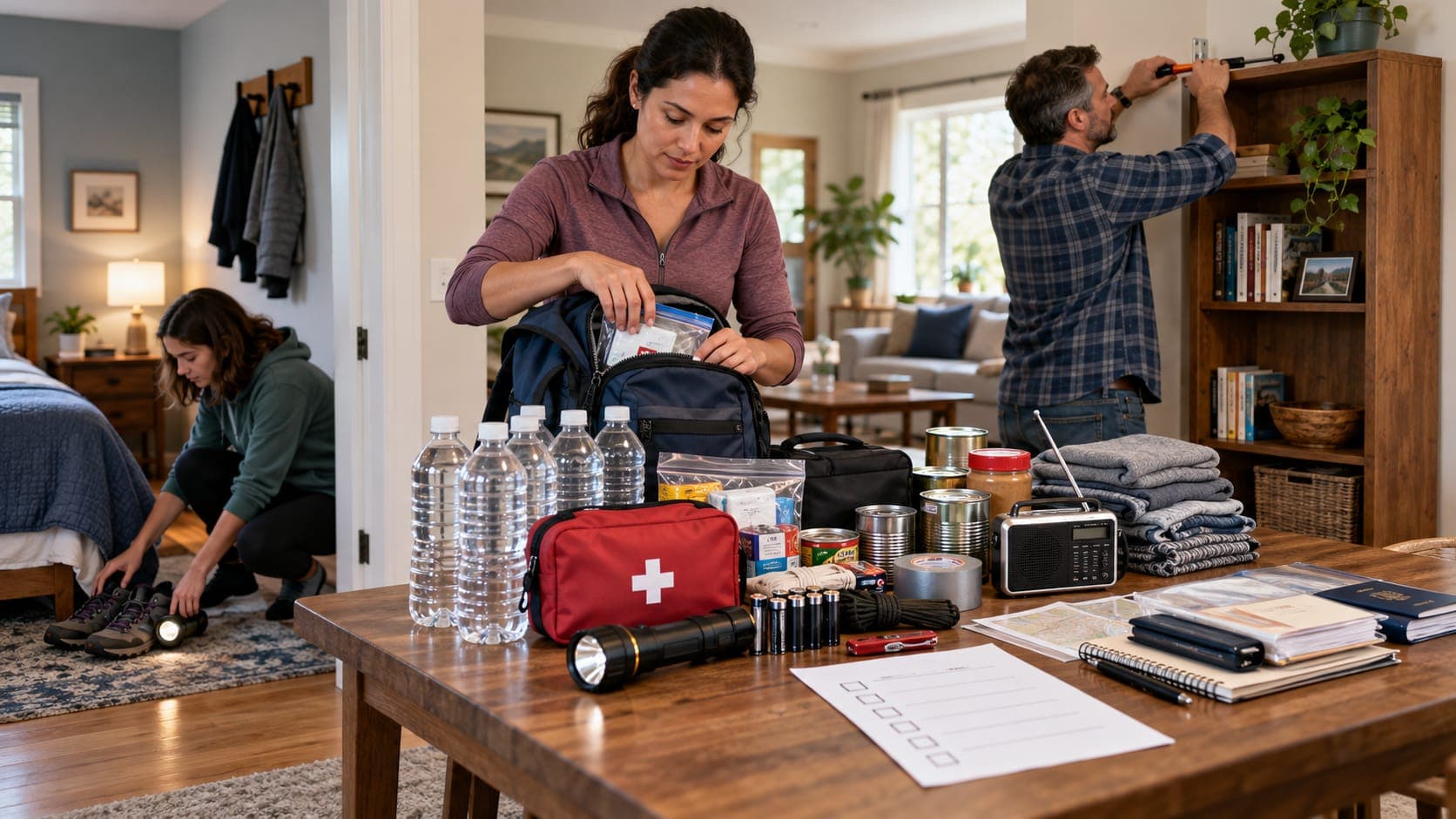
Earthquakes strike without a useful advance warning, so the time to get ready is now, while everything is calm. The good news is that preparing does not require special skills or expensive equipment. A few hours spent securing furniture, packing supplies and talking through a plan can make a real difference to how safely you and your household get through strong shaking and the days that follow.
This guide walks through preparation in the order most people find easiest: understand your risk, make your space safer, build a plan, pack supplies and practice.
Quick answer
To prepare for an earthquake, secure heavy furniture and objects that could fall, make a household plan with an out-of-area contact and a meeting place, store water, food, medicines and other supplies for several days, and practice Drop, Cover and Hold On so it becomes automatic. Check the hazard where you live and follow your local emergency management agency's guidance.
Step 1: Know your local risk
Earthquake hazard varies a lot from place to place. Coastal California, Alaska, the Pacific Northwest, Hawaii and parts of the central and eastern United States all have mapped hazard, and many other countries have national hazard maps too. The USGS National Seismic Hazard Model shows how likely strong shaking is across the United States, and your local or state emergency management agency can tell you about local issues such as Liquefaction, landslides and Tsunami zones.
Knowing your hazard helps you prioritize. If you live near the coast, for example, learning your tsunami evacuation route is just as important as securing your bookcases. You can also look at past activity near you on the EQRadar live map and in the earthquake history view.
Step 2: Make your space safer
In many earthquakes, a large share of injuries come from falling and flying objects rather than collapsing buildings. Walk through each room and ask, "What could fall on someone, block an exit or start a fire?" Then fix the biggest problems first.
- Anchor tall furniture such as bookcases, dressers and cabinets to wall studs with straps or L-brackets.
- Strap the water heater and secure large appliances so they cannot tip or break gas and water lines.
- Move heavy or breakable items to low shelves, and use latches on kitchen cabinets.
- Hang mirrors and pictures away from beds and couches, using closed hooks.
- Secure televisions and computer monitors with safety straps.
- Know where your gas, water and electricity shut-offs are, and how to use them.
Step 3: Make a household plan
Phone networks are often overloaded after a large earthquake, and family members may be at work, school or out. Agree in advance how you will reconnect. Choose an out-of-area contact person whom everyone can text, because long-distance messages sometimes get through when local calls do not. Pick a meeting place near home and one outside your neighborhood.
Write the plan down and keep copies in wallets, backpacks and your emergency kit. Include important phone numbers, medical information and any care needs for children, older adults, people with disabilities and pets. Find out your children's school and childcare emergency procedures, including how and where they release students.
Step 4: Build your supplies
After a damaging earthquake, water, power and stores may be unavailable for days. Ready.gov recommends keeping enough supplies to manage on your own for several days. A good starting point is one gallon of water per person per day, non-perishable food, a flashlight, a battery-powered or hand-crank radio, a first aid kit, extra batteries, a whistle, dust masks, sturdy shoes, prescription medicines and copies of important documents.
Keep a smaller grab-and-go bag in your car and at work as well. Check food, water and batteries once or twice a year; many people do it when they change their clocks. Our emergency kit checklist goes into more detail.
Step 5: Practice what to do during shaking
When shaking starts there is no time to think, so practice until the right response is automatic. In most situations the recommended action is Drop, Cover and Hold On: drop to your hands and knees, cover your head and neck (under a sturdy table or desk if one is nearby) and hold on until the shaking stops. Do not run outside during shaking, and do not stand in a doorway.
Practice in different rooms, at night and with children. Annual events such as the Great ShakeOut earthquake drills are a good reminder to run through your plan. For the full picture, see our lesson on earthquake preparedness.
Step 6: Consider strengthening your home
Some building types are known to be vulnerable, such as older wood-frame houses that are not bolted to their foundations, houses with weak "cripple walls" in the crawl space, and unreinforced brick buildings. If you own an older home in a high-hazard area, ask a licensed engineer or contractor whether it needs retrofitting. Some states and cities offer assistance programs.
If you rent, ask your landlord what has been done, and focus on what you can control: securing contents and knowing safe spots in each room.
What preparation can and cannot do
Preparation reduces risk; it does not remove it. Nobody can tell you exactly when the next damaging earthquake will happen, so treat preparedness as a normal household task, like checking smoke alarms, rather than something to rush when you see an alarming headline. This article is general guidance. For decisions about your building or your local hazards, follow your local emergency management agency and qualified professionals.
Frequently asked questions
What is the single most important thing to do to prepare for an earthquake?
Learn and practice Drop, Cover and Hold On, and secure the heavy objects around the places you spend the most time, especially beds and desks. Those two steps address the most common causes of injury during shaking.
How much water should I store for an earthquake?
Ready.gov recommends at least one gallon of water per person per day, for several days. Store more if you live in a remote area, have pets, or someone in your household has medical needs.
Should I turn off the gas after every earthquake?
Only turn off the gas if you smell gas, hear a hissing sound or suspect a leak. Once it is off, the utility company must turn it back on, which can take a long time after a large earthquake.
Is it worth preparing if I live in a low-hazard area?
Yes. Damaging earthquakes occasionally happen in places that rarely experience them, and the same supplies and plans also help with storms, power cuts and other emergencies.
Key takeaway
Earthquake preparation is a short list of practical tasks: know your hazard, secure what could fall, agree on a household plan, keep several days of supplies and practice Drop, Cover and Hold On. Do it once, then review it once or twice a year.
Sources
- Earthquakes — Ready.gov (U.S. Department of Homeland Security)
- Build a Kit — Ready.gov (U.S. Department of Homeland Security)
- Earthquake Hazards Program — U.S. Geological Survey
- Seven Steps to Earthquake Safety — Earthquake Country Alliance