Is It Safe to Stand in a Doorway During an Earthquake?
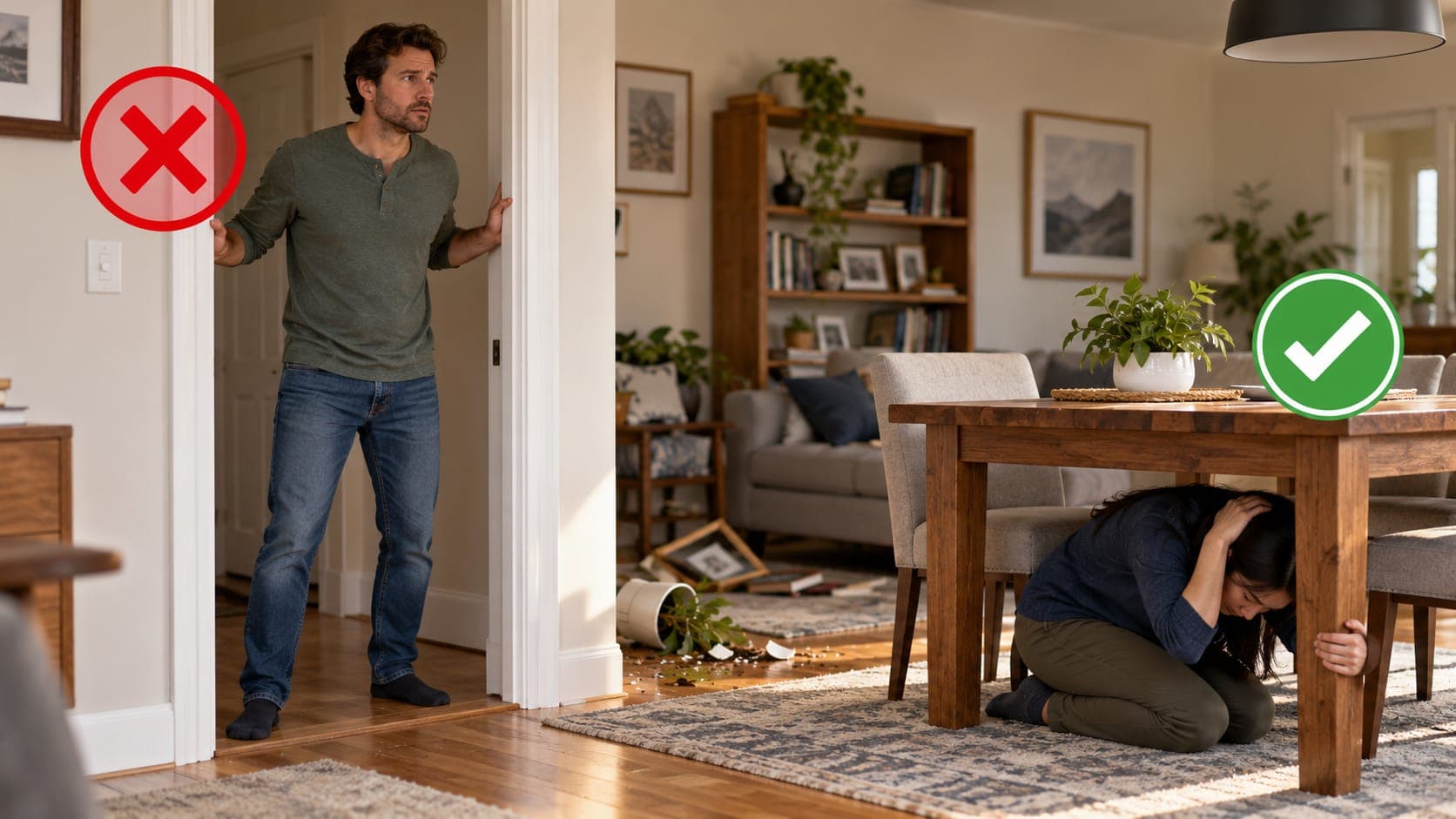
Many people grew up hearing that the safest place in an earthquake is a doorway. It is one of the most widely repeated pieces of earthquake advice, and it is out of date. Safety agencies in the United States, including Ready.gov and the Earthquake Country Alliance, do not recommend it for modern homes.
This article explains where the doorway idea came from, why it does not hold up, and what to do instead. It also looks at two other common ideas: the so-called triangle of life and running outside.
Quick answer
No, standing in a doorway is not recommended for most modern buildings. Doorways are generally no stronger than other parts of a house, the door can swing and hit you, and a doorway gives no protection from flying objects. Instead, Drop, Cover and Hold On: get on your hands and knees, cover your head and neck, ideally under a sturdy table, and hold on until the shaking stops.
Where the doorway myth came from
The advice has its roots in older, unreinforced buildings, such as some adobe and masonry houses. In those structures, the wooden frame around a doorway could be stronger than the surrounding walls, and photos after damaging earthquakes sometimes showed a door frame still standing in an otherwise collapsed house.
Images like that are memorable, and the advice spread. But it was based on a type of building that most people today do not live in, and it ignores the most common causes of earthquake injury.
Why a doorway is not a safe spot today
In modern wood-frame and other code-built homes, the door frame is usually not stronger than the rest of the structure. Total collapse of these homes is uncommon. The far more common danger is being hit by things that fall or fly across a room, or being thrown to the floor.
- A doorway does not shield you from falling or flying objects. Your head and neck stay exposed.
- The door itself can swing hard during shaking and strike you or crush your fingers.
- Standing during strong shaking is hard. People can be knocked over and injured.
- Getting to a doorway means walking or running while the floor moves, which is when many injuries happen.
- A narrow doorway does not fit more than one person, so it cannot be a household plan.
What to do instead
The recommended action for most situations is Drop, Cover and Hold On. Drop to your hands and knees where you are. Cover your head and neck, ideally by crawling under a sturdy table or desk. Hold on until the shaking stops.
If there is no table nearby, crawl to an interior wall away from windows, tall furniture and hanging objects, and protect your head and neck with your arms. If you are in bed, stay there, lie face down and cover your head and neck with a pillow. For more situations, see what to do during an earthquake indoors.
What about the triangle of life?
Another idea that circulates online is the triangle of life. It suggests that instead of getting under a table, you should lie next to a large object such as a sofa, hoping that a collapsing ceiling will leave a gap beside it.
Safety agencies, including the Earthquake Country Alliance, do not recommend this. The idea assumes total building collapse, which is uncommon in the United States and other places with modern building codes. It also requires moving around during shaking to find the right object, and it leaves you exposed to falling and flying contents, which are the leading cause of injuries. Large furniture can also slide or tip during strong shaking.
What about running outside?
Running outside feels instinctive, but it is also not recommended. Trying to walk or run during strong shaking leads to falls and injuries. Just outside a building is often the most dangerous place to be, because glass, bricks, signs and parts of the facade fall there.
If you are already outside, stay outside and move away from buildings, trees and power lines if you can. Read more in what to do during an earthquake outside.
Common ideas compared
Here is a quick comparison of popular advice against what U.S. safety agencies recommend.
| Idea | Recommended? | Why |
|---|---|---|
| Stand in a doorway | No | Not stronger in modern homes; door can swing; no cover from falling objects |
| Triangle of life | No | Assumes collapse; requires moving; exposes you to flying objects |
| Run outside | No | Falls and falling debris near exits cause injuries |
| Drop, Cover and Hold On | Yes | Protects head and neck and keeps you from being knocked down |
Is the advice the same everywhere?
Drop, Cover and Hold On is the standard guidance in the United States and many other countries with modern building codes. In some parts of the world, where buildings are built differently, local authorities may give advice tailored to their structures. When you travel or live abroad, follow the guidance of the local emergency management agency.
Replace the old habit with practice
Old advice sticks because people learned it young. The best way to replace it is practice. Take part in a Great ShakeOut drill, run through Drop, Cover and Hold On with your household, and point out the safe spot in each room. Our earthquake safety tips page summarizes what to do before, during and after.
Frequently asked questions
Why did people used to recommend doorways?
In some older unreinforced buildings, door frames could be stronger than the walls, and photos of standing door frames in collapsed houses made the idea popular. That reasoning does not apply to most modern homes.
What if I happen to be standing in a doorway when shaking starts?
Do not stay standing there. Drop to your hands and knees, cover your head and neck, and if a sturdy table is a step or two away, crawl under it. Keep clear of the door, which can swing during shaking.
Is the triangle of life backed by safety agencies?
No. U.S. safety organizations, including the Earthquake Country Alliance, recommend Drop, Cover and Hold On instead and advise against the triangle of life method.
What if I cannot get down on the floor?
If you use a wheelchair or walker, lock the wheels, bend over and cover your head and neck. If you use a cane, sit down if you can and cover your head and neck.
Key takeaway
Doorways are not safe havens in modern buildings. Skip the doorway, the triangle of life and the run outside. Drop, Cover and Hold On where you are, ideally under a sturdy table, and protect your head and neck.
Sources
- Drop, Cover, and Hold On — Earthquake Country Alliance
- Earthquakes — Ready.gov (U.S. Department of Homeland Security)
- Great ShakeOut Earthquake Drills — Earthquake Country Alliance