How to Earthquake-Proof Your Home
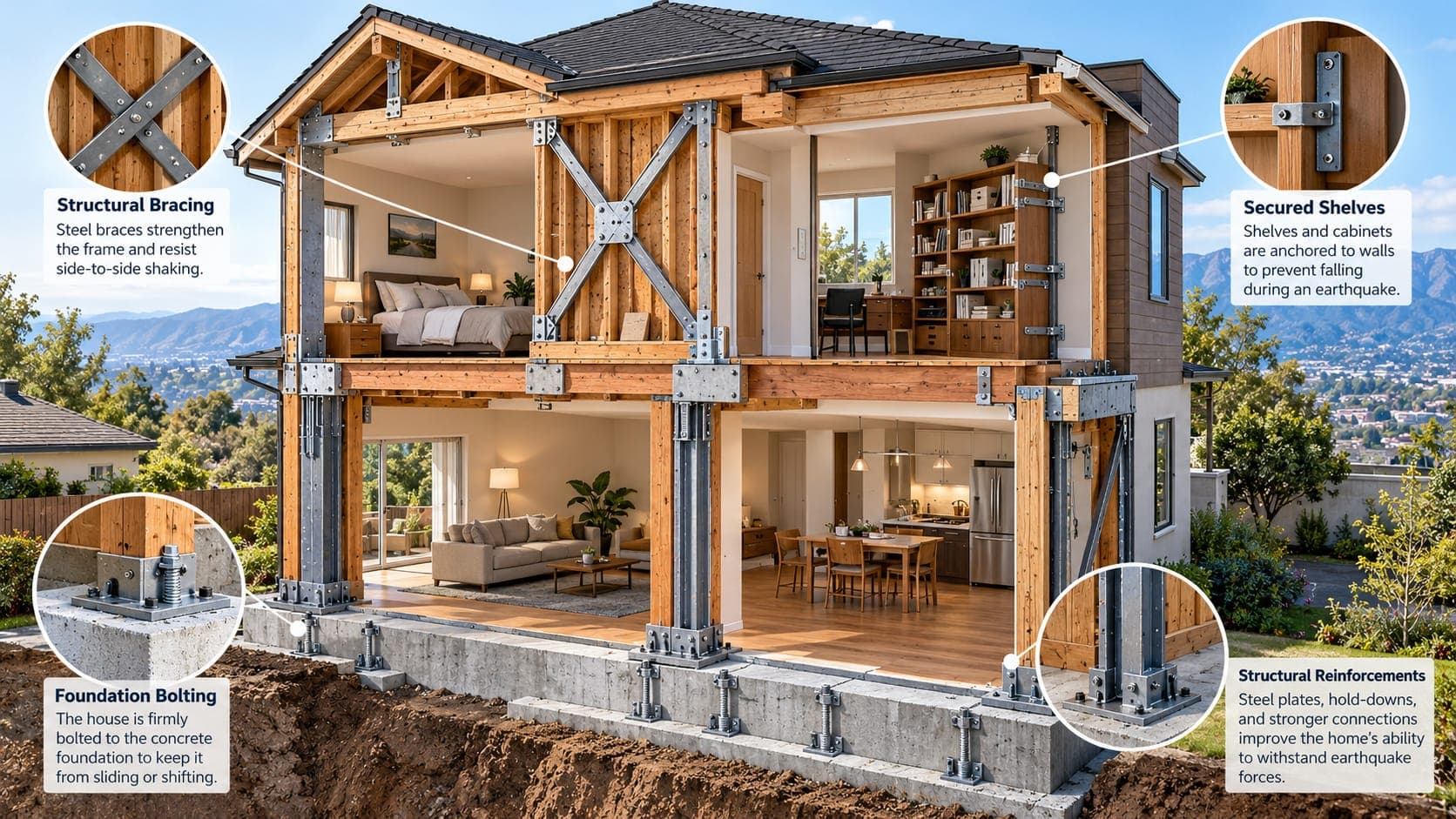
No house can be made fully earthquake-proof. Very strong shaking can damage even well-built homes. What you can do is make your home earthquake-resistant: less likely to suffer serious damage, and much less likely to injure the people inside.
This guide covers two levels of work. The first is securing the contents of your home, which almost anyone can do, including renters. The second is strengthening the structure itself, which usually needs a licensed professional. It also explains which building types tend to need which fixes.
Quick answer
To make your home more earthquake-resistant, first secure what can fall or break: anchor tall furniture, strap the water heater, latch cabinets and use flexible gas connections. Then check the structure. Older homes may need bolting to the foundation, bracing of crawl-space cripple walls, or a soft-story retrofit. Unreinforced brick buildings need professional work. Hire a licensed engineer or contractor for any structural retrofit.
Earthquake-proof versus earthquake-resistant
Building codes in high-hazard areas aim mainly to protect lives. A code-built home is designed so that it should not collapse in strong shaking, but it may still be damaged. Retrofitting an older home works toward the same goal and can also reduce repair costs.
Thinking in terms of earthquake-resistant rather than earthquake-proof helps you set realistic priorities: first protect people from falling objects and fire, then reduce the chance of serious structural damage.
Level 1: Secure your contents
Falling furniture, appliances and objects cause many injuries in earthquakes, and fires after earthquakes often start with broken gas lines or tipped appliances. These fixes are inexpensive and usually take an afternoon.
- Anchor bookcases, dressers, cabinets and other tall furniture to wall studs with straps or L-brackets.
- Strap the TV and computer monitors, and use museum putty for small objects on shelves.
- Add latches to kitchen and bathroom cabinets so doors stay closed.
- Hang mirrors and framed pictures on closed hooks, and keep heavy ones away from beds and couches.
- Store heavy items and glass on low shelves.
- Keep flammable liquids and chemicals in closed containers on low shelves, separated from each other.
Water heater and gas lines
A water heater that tips over can break its gas line and start a fire, or flood the home. Strap it to the wall studs at the top and bottom with a proper water heater bracing kit. In California, strapping is required by law, and local codes elsewhere may require it too.
Rigid gas connections can snap when appliances move. Flexible gas connectors on the stove, dryer and water heater allow some movement. An automatic gas shut-off valve, sometimes called a seismic valve, can stop the gas flow after strong shaking or a large leak. Some local governments require these valves in certain situations. Gas work should always be done by a licensed plumber or your gas company. Remember that if a valve shuts off your gas, it needs to be reset safely before gas is restored.
Level 2: Strengthen the structure
Structural weaknesses depend a lot on when and how a home was built. Many older wood-frame homes were built before modern earthquake provisions. Common upgrades include:
- Bolting the house to its foundation, so the frame cannot slide off during shaking.
- Bracing cripple walls, the short wood walls in some crawl spaces between the foundation and the first floor, usually with plywood panels, so they do not collapse sideways.
- Soft-story retrofits for buildings with large open spaces on the ground floor, such as garages or tuck-under parking, often using steel frames or added shear walls.
- Strengthening or replacing unreinforced brick chimneys, which often crack and fall.
- Retrofitting unreinforced masonry buildings, which is complex and must be designed by an engineer.
Building types and common fixes
This table gives a general picture. Your home may be different, so ask a licensed structural engineer or an experienced, licensed contractor to inspect it before you decide on work.
| Building type | Common weak point | Typical fix |
|---|---|---|
| Older wood-frame house on a raised foundation | Not bolted to foundation; weak cripple walls | Foundation bolting and cripple wall bracing |
| House or apartment over a garage | Weak, open ground floor (soft story) | Engineered soft-story retrofit |
| Unreinforced brick or stone building | Walls can separate and fall outward | Engineered retrofit; anchors, bracing and wall strengthening |
| Manufactured or mobile home | Can shift off its supports | Engineered tie-down or bracing system |
| Any home with a brick chimney | Chimney cracks and falls | Bracing, or replacing the upper part with a lighter flue |
Working with professionals
Structural retrofits involve permits, engineering and careful work under the house. Hire a licensed contractor, and for anything beyond a standard bolt-and-brace job, a licensed structural engineer. Ask for references, check licenses with your state, and get permits from your local building department. A retrofit that is done incorrectly may not help at all.
Some areas offer programs that help pay for retrofits. In California, the Earthquake Brace + Bolt program offers help for eligible homes in certain areas. Check with your city, county or state to see what is available where you live. Some earthquake insurance providers also offer discounts for retrofitted homes.
If you rent
Renters cannot usually retrofit a building, but they can still do a lot. Secure your own furniture and belongings, with your landlord's permission for wall anchors. Ask your landlord whether the water heater is strapped and whether the building has had a seismic evaluation or retrofit. Some cities require retrofits of certain older building types, and owners may be able to tell you about the work.
Know your safe spots, keep an emergency kit, and consider renters earthquake coverage for your belongings. Our weekend action plan walks you through a room-by-room hazard hunt.
Frequently asked questions
Can any house really be made earthquake-proof?
No. Every building can be damaged by strong enough shaking. Retrofits and secured contents make a home much more resistant and safer for the people inside, which is the realistic goal.
How do I know if my house is bolted to its foundation?
In a home with a crawl space, you can often see large bolts or metal plates connecting the wood sill to the concrete foundation. If you are unsure what you are looking at, ask a licensed contractor or engineer to inspect it.
Can I do a retrofit myself?
Securing furniture and contents is a good do-it-yourself job. Structural retrofits usually need permits and should be designed and built by licensed professionals, because mistakes can leave the house no stronger than before.
Are newer homes already earthquake-resistant?
Homes built under modern codes in high-hazard areas include earthquake provisions, but contents can still fall and cause injuries. Securing furniture, appliances and the water heater is important in any home.
Key takeaway
Aim for earthquake-resistant, not earthquake-proof. Secure contents first, strap the water heater and use flexible gas connections, then have a licensed professional check the structure for issues like foundation bolting, cripple walls, soft stories and unreinforced masonry.
Sources
- Earthquake Brace + Bolt — California Earthquake Authority
- Seven Steps to Earthquake Safety — Earthquake Country Alliance
- Earthquakes — Ready.gov (U.S. Department of Homeland Security)
- Federal Emergency Management Agency — FEMA