2011 Japan Earthquake and Tsunami
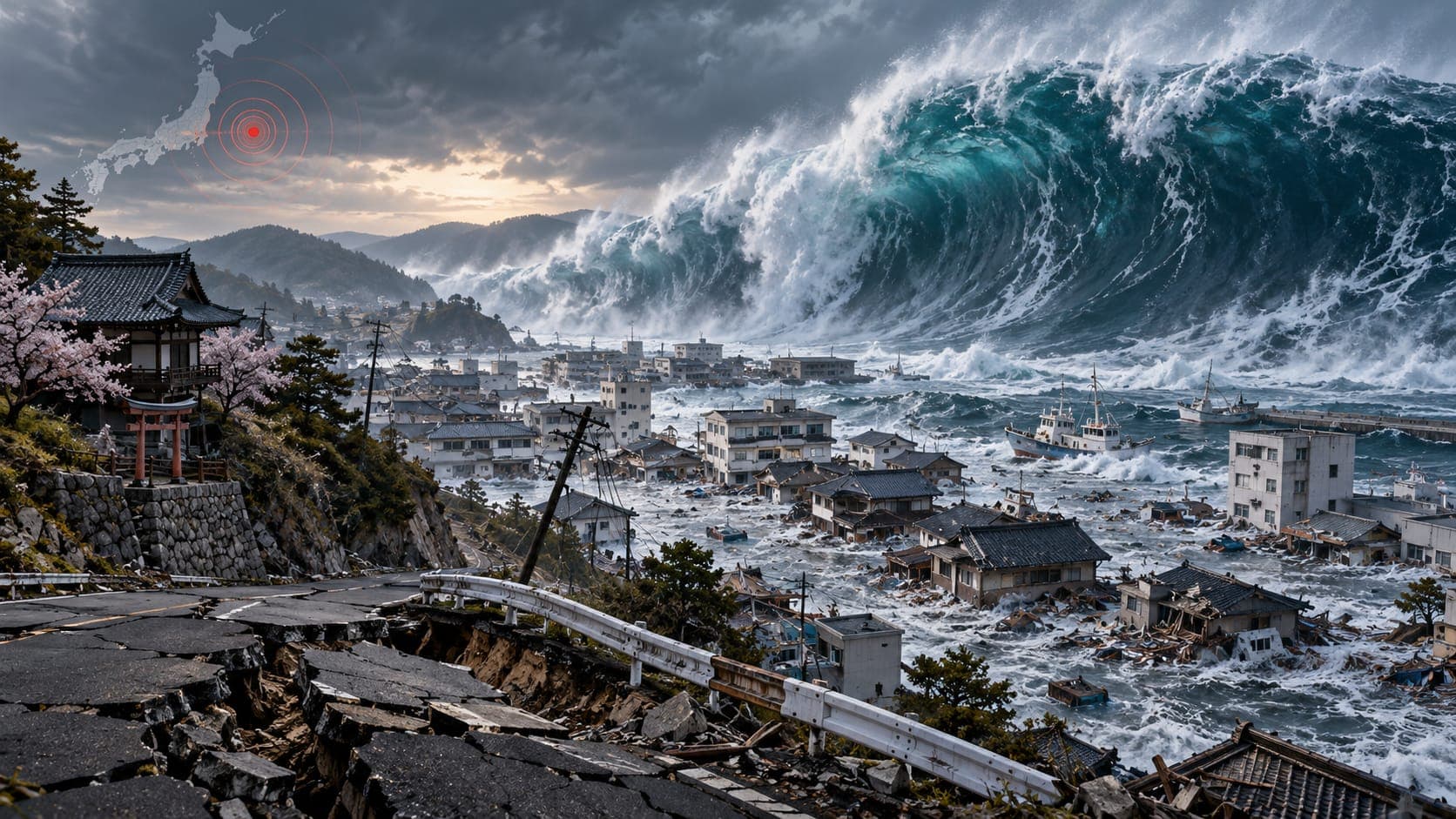
On the afternoon of March 11, 2011, one of the largest earthquakes ever recorded struck off the northeast coast of Japan. Within minutes, a tsunami began reaching the coast, overtopping seawalls and sweeping through towns. Nearly 20,000 people died or remain missing.
Japan is among the best-prepared countries in the world for earthquakes, and its buildings largely withstood the intense shaking. The 2011 disaster showed how a very large tsunami can still overwhelm defenses, and it led to major changes in tsunami planning and nuclear safety.
Quick answer
The 2011 Tōhoku earthquake struck off northeastern Japan on March 11, 2011. The Japan Meteorological Agency rates it magnitude 9.0, and the USGS lists it as 9.1. It ruptured the Japan Trench megathrust and generated a tsunami with run-up heights over 30 meters in some places. Nearly 20,000 people died or remain missing, most from the tsunami, and flooding at the Fukushima Daiichi nuclear plant caused a serious nuclear accident.
Northeastern Japan (Tōhoku)The earthquake
The earthquake began at 2:46 p.m. local time, with its Epicentre in the Pacific Ocean east of the Tōhoku region of Honshu. It occurred on the Japan Trench, a Subduction zone where the Pacific Plate sinks beneath northern Japan. A section of the plate boundary several hundred kilometers long slipped, and near the trench the slip reached tens of meters, among the largest ever measured.
Strong shaking lasted for several minutes along much of the northeastern coast and was felt across Japan, including in Tokyo, hundreds of kilometers away. Parts of the coastline moved east by several meters and sank, which made low-lying areas more vulnerable to flooding.
Early warning in action
Japan's national earthquake early warning system detected the first waves and issued alerts before strong shaking reached many areas, including Tokyo, where people received warning seconds before the strongest shaking arrived. Trains, including high-speed Shinkansen trains, were slowed or stopped automatically.
The Japan Meteorological Agency also issued tsunami warnings within minutes. However, the initial estimates of the earthquake's size and the expected wave heights were too low, because measuring a giant earthquake quickly is very difficult. Warnings were raised as more data arrived. Our article on the earthquake early warning system explains how these systems work.
The tsunami
The sudden upward movement of the sea floor pushed up a huge volume of water, creating a Tsunami. The first waves reached parts of the coast in roughly 30 minutes or less. Along the deeply indented coastline of Iwate and Miyagi prefectures, the water rose especially high, and run-up heights in some places exceeded 30 to 40 meters above sea level.
The tsunami overtopped seawalls built for smaller events, flooded coastal plains for several kilometers inland and destroyed entire neighborhoods. Most of the people who died were killed by the tsunami rather than the shaking. The waves also crossed the Pacific and caused damage at harbors in places as far away as Hawaii and California.
The Fukushima Daiichi nuclear accident
The Fukushima Daiichi nuclear power plant on the coast of Fukushima Prefecture shut down its operating reactors automatically when the earthquake hit. However, the tsunami flooded the site and knocked out the backup power needed to keep the reactors cool. Without cooling, the cores of three reactors were severely damaged, and radioactive material was released.
Tens of thousands of residents were evacuated from the surrounding area, and some communities remained off-limits for years. The accident led to major reviews of nuclear safety in Japan and around the world, especially of protection against tsunamis and loss of power.
The human toll and recovery
Nearly 20,000 people died or remain missing, most of them in Iwate, Miyagi and Fukushima prefectures. Many were older adults who had difficulty evacuating quickly. Hundreds of thousands of people lost their homes or were displaced, and rebuilding coastal towns took many years.
Large aftershocks continued for months, and aftershock activity remained elevated for years, which is typical after an earthquake this large.
Lessons from 2011
The disaster changed how Japan and other countries prepare for tsunamis. Key lessons include:
- Plan for the largest plausible tsunami, not just the size of recent ones.
- Do not rely on seawalls alone; evacuation to high ground remains essential.
- On the coast, strong or long shaking is a warning in itself: move to high ground immediately without waiting for an official alert.
- Do not return to low areas until officials say it is safe, because later waves can be larger than the first.
- Critical facilities need protected backup power and defenses against flooding.
Frequently asked questions
Was the 2011 Japan earthquake magnitude 9.0 or 9.1?
Both figures are used. The Japan Meteorological Agency rates it 9.0, and the U.S. Geological Survey lists it as 9.1. The small difference comes from different data and calculation methods.
How high was the 2011 tsunami?
Heights varied a lot along the coast. In some narrow bays of the Tōhoku coast, the water ran up the land to more than 30 meters, and in a few places close to 40 meters above sea level.
Did buildings in Japan collapse from the shaking?
Most buildings withstood the shaking well thanks to strict seismic building codes, though there was damage. The great majority of deaths were caused by the tsunami.
Where can I see current earthquakes and tsunami alerts for Japan?
The Japan Meteorological Agency issues official warnings for Japan. On EQRadar, you can see recent USGS-reported earthquakes on the live map and official NOAA tsunami alerts on the tsunami page.
Key takeaway
The magnitude 9.0 to 9.1 Tōhoku earthquake of 2011 produced a tsunami that overwhelmed coastal defenses, left nearly 20,000 people dead or missing and caused the Fukushima nuclear accident. Its main lesson: after strong shaking on the coast, head for high ground right away.
Sources
- Japan Meteorological Agency — Japan Meteorological Agency
- 20 Largest Earthquakes in the World — U.S. Geological Survey
- Tsunami Safety — National Weather Service (NOAA)
- U.S. Tsunami Warning System — NOAA / National Weather Service